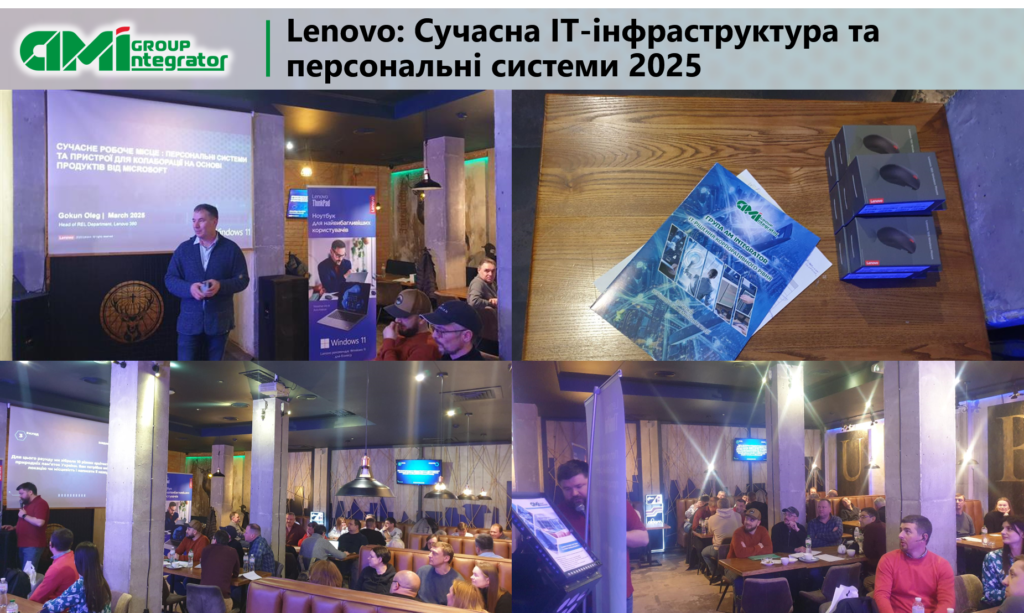
The invited guests joined the topical issues of building effective workspace collaboration, principles and new approaches to forming a workplace in hybrid work conditions, protecting workplaces, forming a reliable server infrastructure, and also got acquainted with advanced tools for minimizing IT threats.
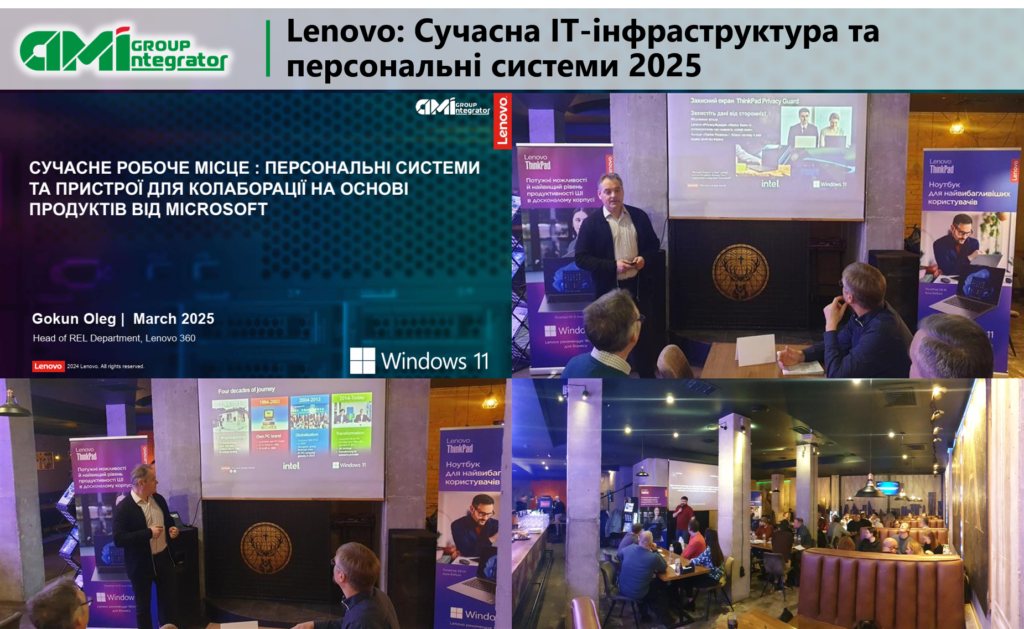
During the first topic of the seminar «Modern Workplace Based on Lenovo and Microsoft Products, Trends and Security» the head of Lenovo’s corporate direction in Ukraine, Oleg Gokun spoke about the latest workspace technologies that improve the performance of both individual employees and companies as a whole. Among the products presented were original solutions for productivity and communications: a line of corporate laptops Lenovo ThinkPad, compact system units Lenovo ThinkCentre (Nano and Tiny-in-One), the latest monitors ThinkVision. Separately, Lenovo's intelligent security solutions were emphasized: Endpoint Security and ThinkShield, which provide comprehensive protection (including 8 authentication modes), reliability, guaranteed performance and continuity of business processes.
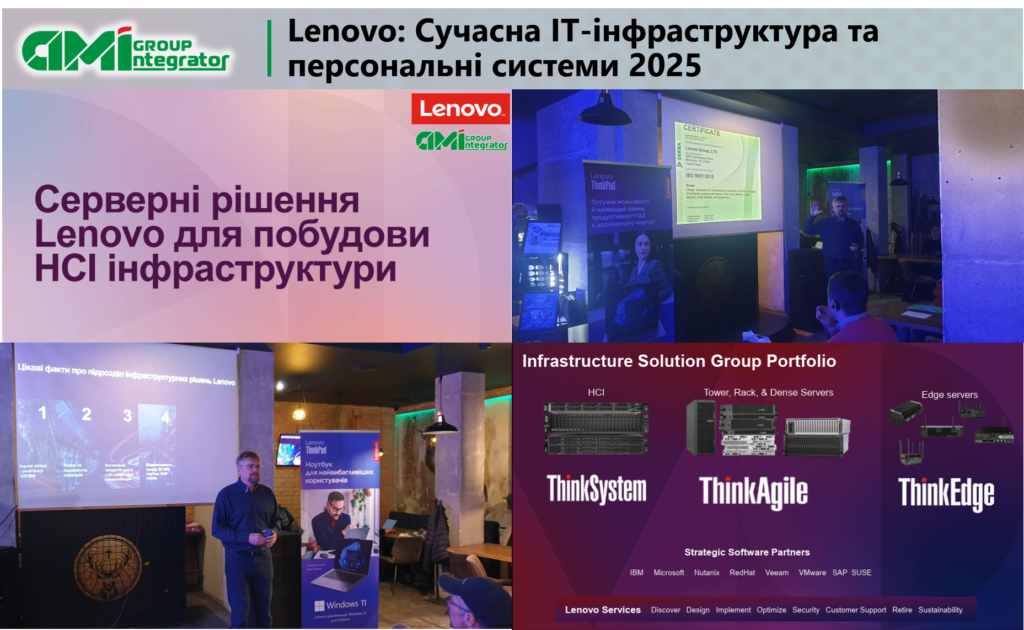
In the second report «Lenovo Server Solutions for HCI Infrastructure» technical specialist Lenovo in Ukraine Oleksandr Ivashchenko revealed the features of building a hyperconverged infrastructure based on server equipment from Lenovo. The main attention was paid to the reliability of Lenovo server equipment, centralized management of information infrastructure and extended support of the manufacturer. The audience was particularly interested in the questions of the universality of using hyperconverged architecture to solve business problems and examples of building HCI solutions for real customers in Ukraine, practical cases of ensuring reliability and resilience to failures of computing infrastructure.
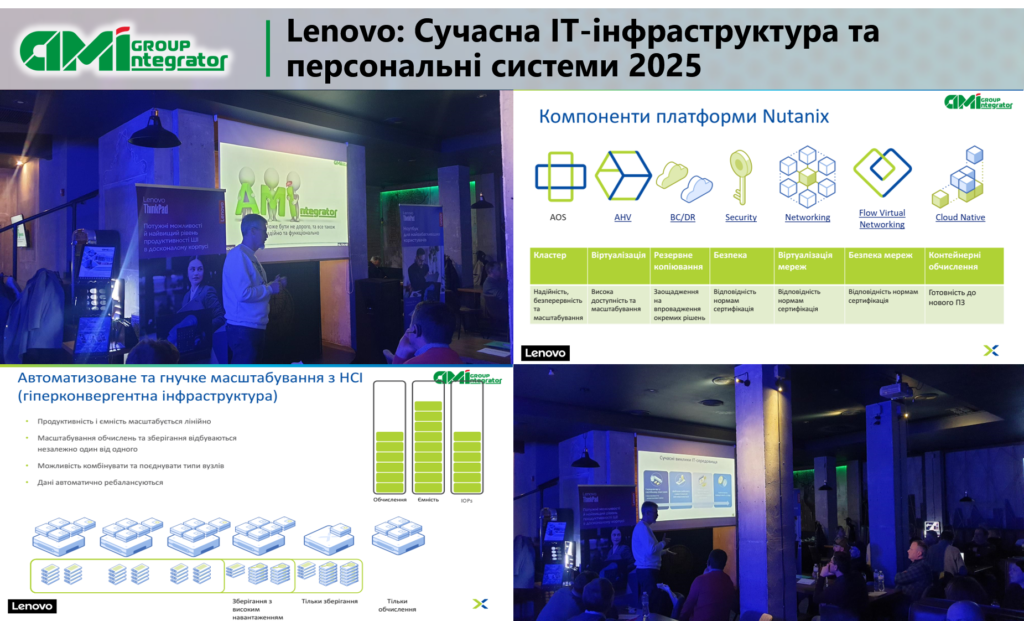
In the third block of the event «Nutanix with Lenovo – it may not be expensive» Mykola Mostovenko, solution architect for the AM Integrator Group data center, presented the capabilities and advantages of the Nutanix platform for solving problems and tasks of developing and modernizing the enterprise’s IT environment, which include: readiness for failures, lack of a single point of failure and control, scaling ease, lack of rigid architectural design choices, and advantages of software-defined solutions technology.